





Activités scientifiques du département
Le DMA est à la fois un département d'enseignement et un département de recherche. Cette structuration originale vise notamment à mettre très tôt les élèves au plus près de la recherche en train de se faire.
Publications
L'essentielle de publications des membres du département, des thèses et des HDR qui y sont soutenues sont disponibles sur le serveur HAL.
-
24 October 2026 hal-05828961 publication
Since the early days of quantum information science, diverse strategies have been proposed to encode qubits and implement quantum gates across various physical platforms. Modes and bosonic states offer a flexible framework for quantum information processing, from single-photon optics to superconducting circuits, combining massless and massive particles. Universal gate sets have been established for specific encodings—such as those based on Fock states or the field’s quadratures. However, a general framework clarifying how different bosonic resources—such as mode structure, particle-number statistics, Gaussian and non-Gaussian states and operations—combine to enable universality and potential quantum advantage irrespectively of the encoding remains lacking. A main difficulty lies in the coexistence of distinct paradigms that appear to combine loosely in bosonic quantum information: discrete-variable schemes—where information is encoded in qubits or effective finite-dimensional systems—and continuous-variable schemes—which rely on infinite-dimensional Hilbert spaces associated with the field’s quadratures. Despite the success of each approach, they remain seemingly incompatible in many aspects—in particular in terms of physical resource analysis for universality—due to their underlying mathematical differences. In this work, we apply a superselection-rule-compliant framework for bosonic quantum information that unifies these paradigms. This representation explicitly incorporates the phase reference and enforces total particle number conservation, allowing for a consistent treatment of bosonic quantum information protocols and resources across both discrete and continuous regimes. We derive necessary and sufficient conditions expressed in terms of Gaussian and non-Gaussian resources for universality that apply to any encoding, without resorting to specific mappings. Our results show that continuous variable encodings are not fundamentally distinct from discrete ones, but rather emerge as subspaces within a general bosonic structure. Importantly, in such a widely studied framework, non-Gaussian properties of bosonic states and operations can be washed out, providing evidence that the continuous variables regime is not the most suitable to fully assess the quantum properties of bosons.
Eloi Descamps, Astghik Saharyan, Adrien Chivet, Arne Keller, Pérola Milman
-
23 October 2026 hal-05836411 pré-publication
We prove a sharp quantitative version of the Talenti rearrangement inequality.
Paolo Acampora, Jimmy Lamboley, Idriss Mazari
-
15 October 2026 tel-05801443 thèse
This PhD thesis presents contributions to the field of deep learning. From convolutional ResNets to Transformers, residual connections are ubiquitous in state-of-the-art deep learning models. The continuous depth analogues of residual networks, neural ODEs, have been widely adopted, but the connection between the discrete and continuous models still lacks a solid mathematical foundation. In this manuscript, we will show that for a formal correspondence between residual networks and neural ODEs to hold, the residual functions must be smooth with depth, and we will present an implicit regularization result of deep residual networks towards neural ODEs. We will then present two applications of this analogy to the design and study of new architectures. First, we will introduce a drop-in replacement for any residual network that can be trained with the same accuracy, but with much less memory. Second, by viewing the attention mechanism as an interacting particle system, where the particles are the tokens, we will study the impact of attention map normalization on the Transformer model. Finally, we will present some other contributions to Transformers: how Transformers perform in-context autoregressive learning and how to differentiably route tokens to experts in Sparse Mixture of Experts Transformers.
Michaël Eli Sander
Les actualités de la recherche
Annonce de conférences, congrès et autres événements scientifiques.
-
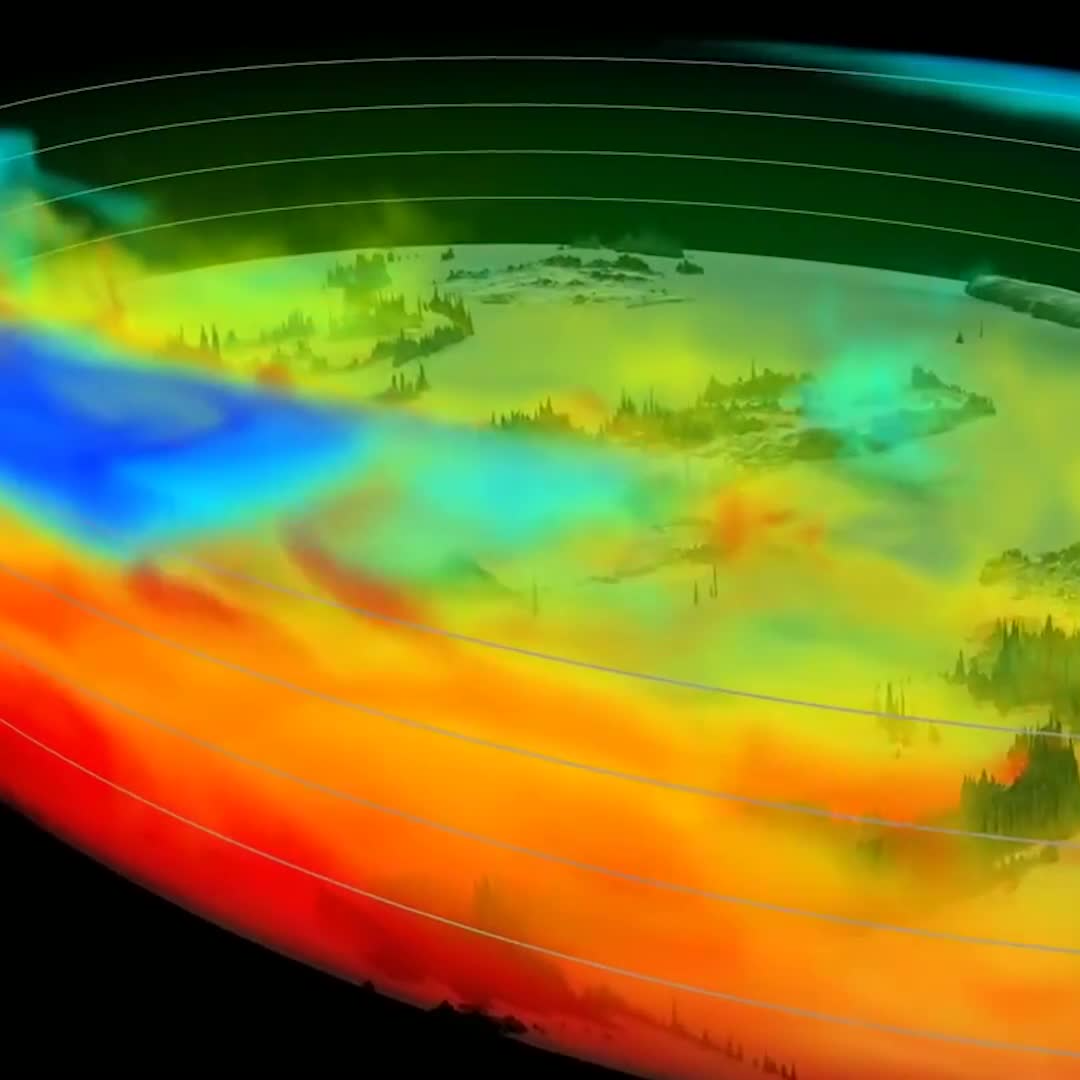
Lancement du séminaire math-environnement au DMA
A partir du 14 octobre, ce nouveau rendez-vous, créé par le comité environnement du département,
-
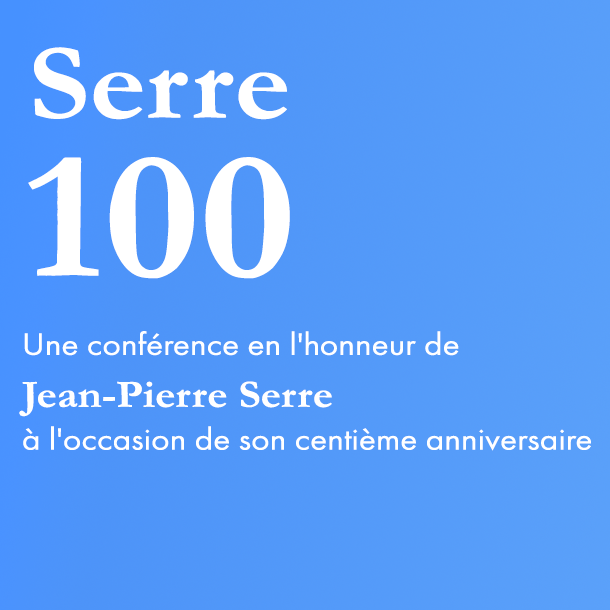
Serre 100, une conférence en l’honneur du centième anniversaire de Jean-Pierre Serre à l’IHP
Rediffusion sur la chaîne youtube de l'IHP de la conférence du mardi 15 et mercredi
-
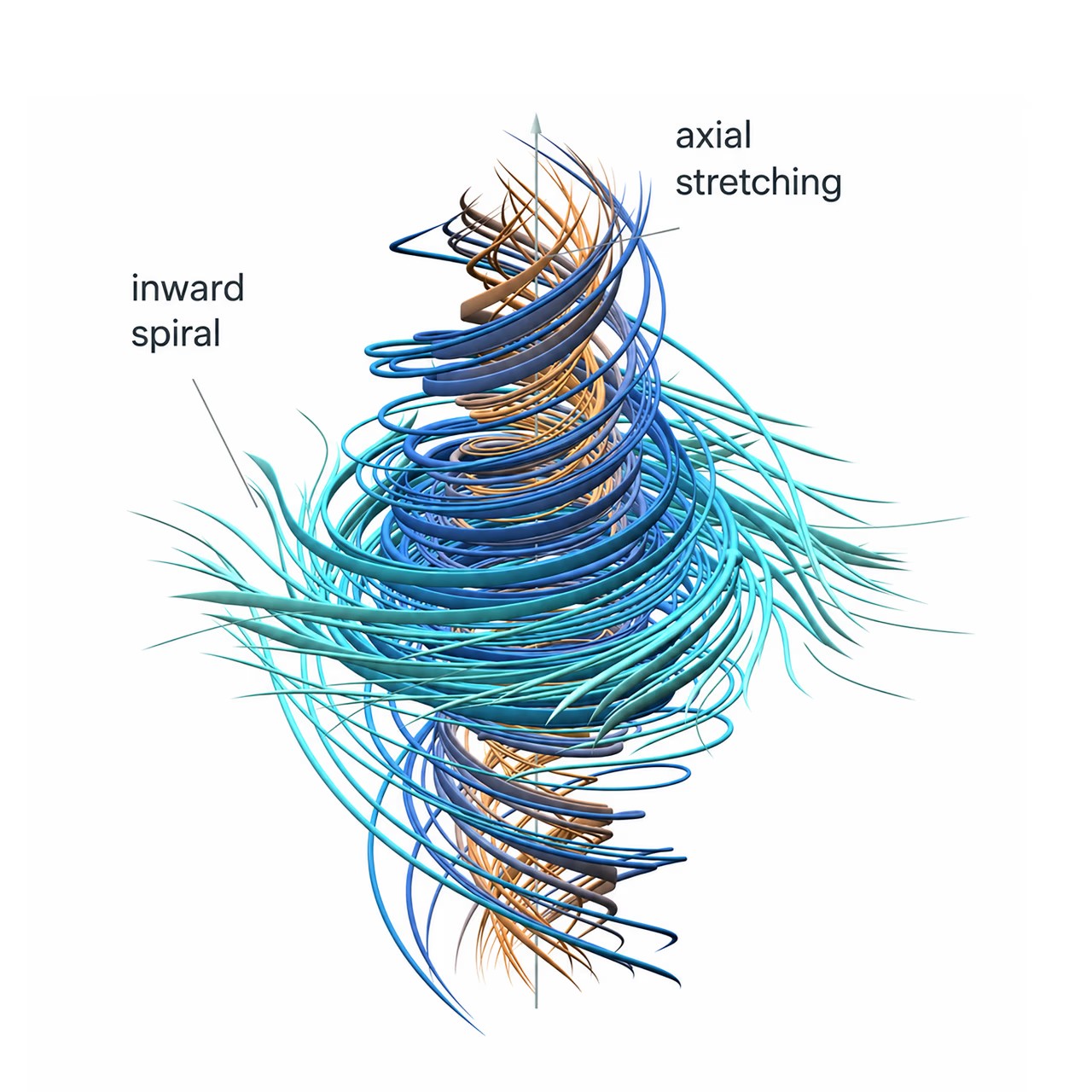
OpenAI annonce une solution à l’équation de Navier-Stokes : deux membres du DMA interviennent sur Radio France
Gabriel Peyré et Amaury Hayat ont été interrogé pour contextualiser cette événement majeur en
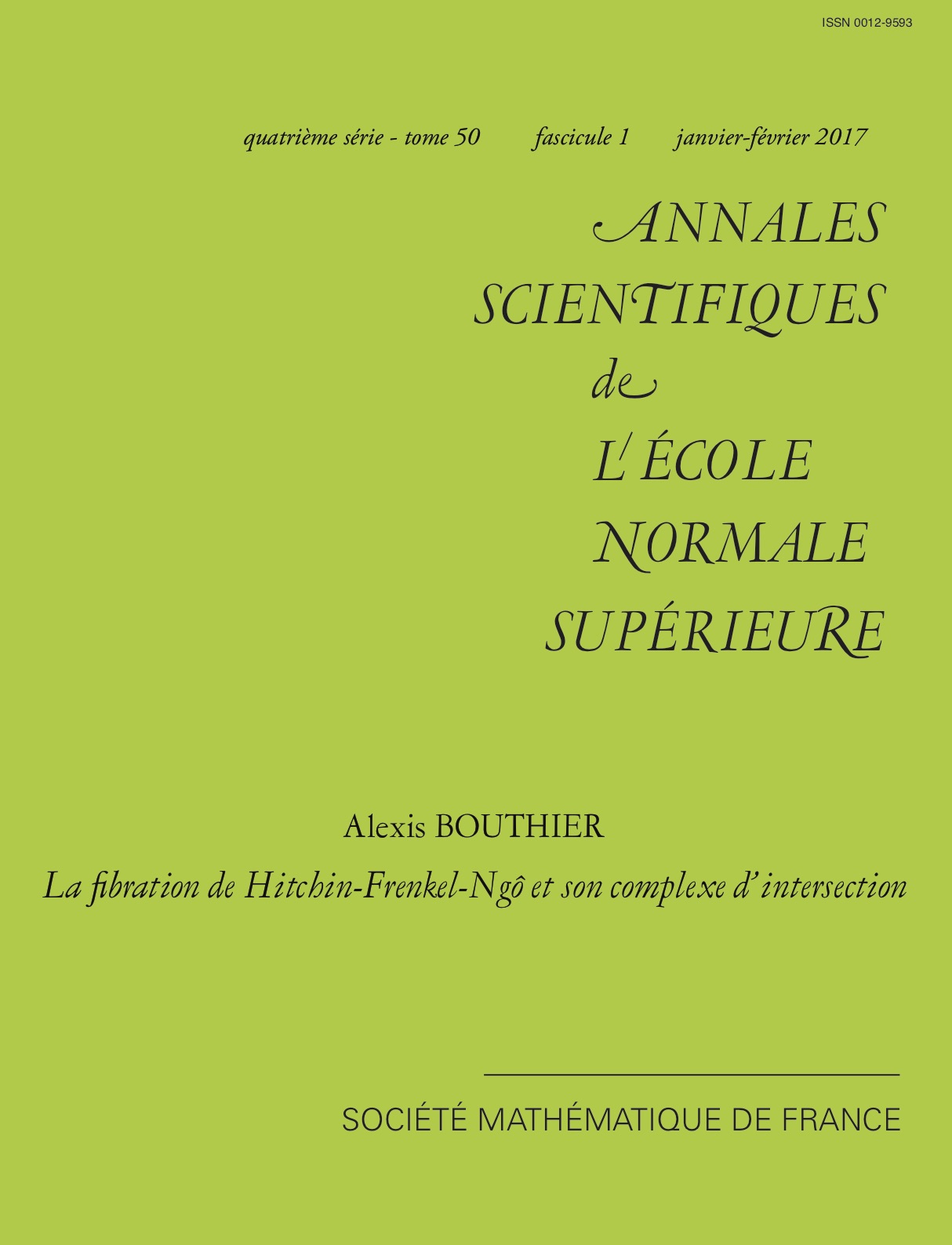
Annales de l’ENS
Les Annales scientifiques de l’École normale supérieure publient 6 fascicules par an. Elles sont éditées par la Société mathématique de France depuis 2008.